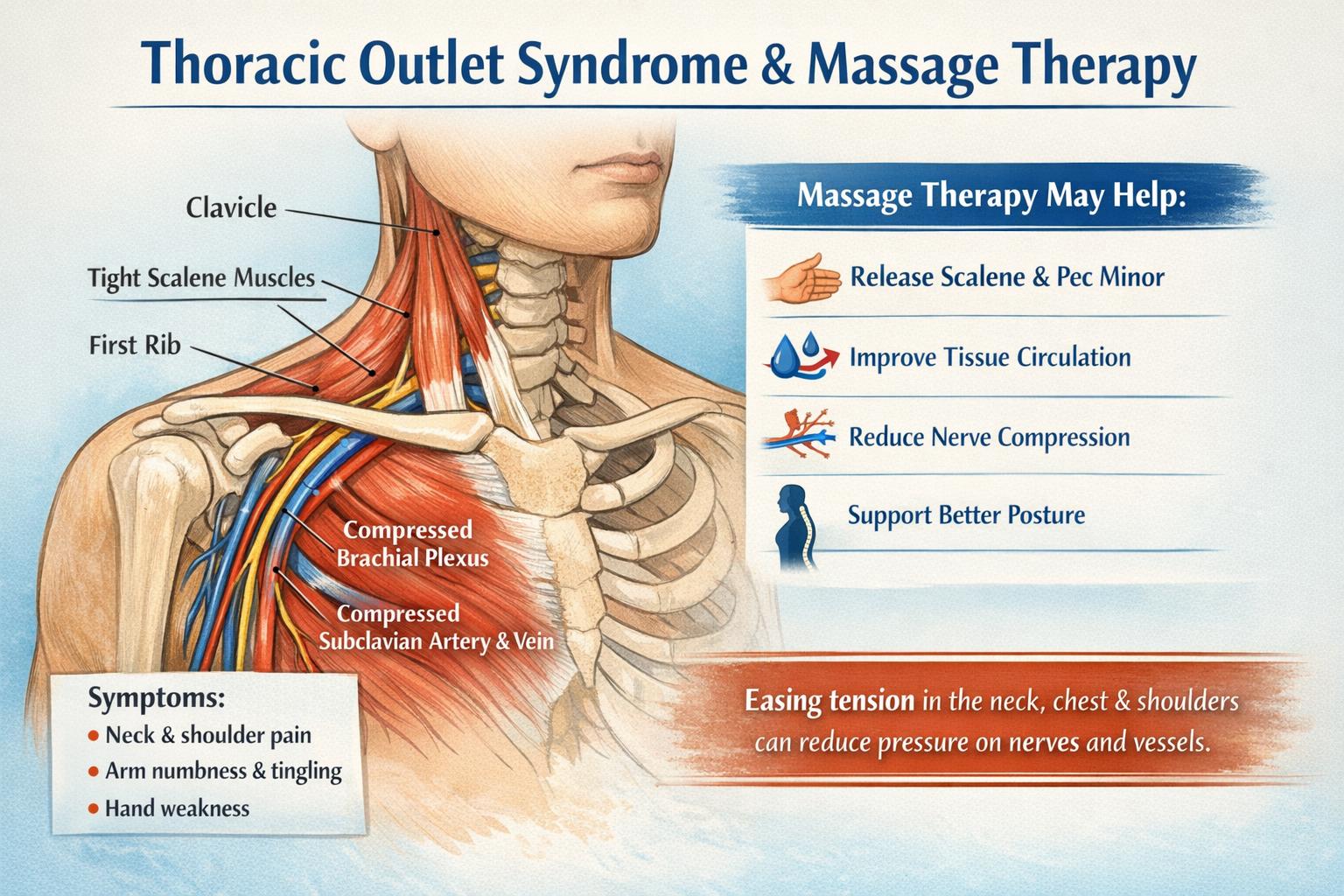
Thoracic Outlet Syndrome (TOS) occurs when nerves or blood vessels become compressed in the space between the collarbone and the first rib, an area known as the thoracic outlet.
This space contains important structures such as the brachial plexus (the network of nerves that supplies the arm) as well as major blood vessels. When compression occurs, it may lead to symptoms such as:
• neck or shoulder pain
• numbness or tingling in the arm or fingers
• weakness in the hand
• discomfort when lifting the arms overhead
Several factors can contribute to this compression, including tight neck and chest muscles, poor posture, and repetitive overhead activities.
How Massage Therapy May Help
Massage therapy may support individuals with thoracic outlet syndrome by addressing muscle tension and fascial restrictions that can narrow the thoracic outlet space.
Bodywork may help by:
✔ reducing tension in the scalene muscles and upper trapezius
✔ releasing tightness in the pectoralis minor and chest fascia
✔ improving circulation to surrounding tissues
✔ supporting healthier postural alignment
When muscles in the neck, chest, and shoulder region relax and move more freely, pressure around nearby nerves and blood vessels may decrease.
Important Considerations
Because thoracic outlet syndrome involves sensitive nerve and vascular structures, treatment should always be gentle and tailored to the individual. In some cases, collaboration with healthcare providers such as physicians or physical therapists may be recommended.
Massage therapy does not replace medical care, but it may be a helpful complementary approach in supporting mobility, comfort, and overall tissue health.
The body works best when its structures have space to move and function freely. Supporting healthy muscle and fascial mobility is one way bodywork can help restore that balance.